Occupational Therapy
Occupational Therapy for Autism: Skills, Goals, and Home Activities
How occupational therapy for autism builds fine motor, self-care, sensory, and play skills, what an OT evaluation involves, and activities to try at home.

Westminster & Orange County, CA
Building independence through fine motor development, sensory support and self-care skills.
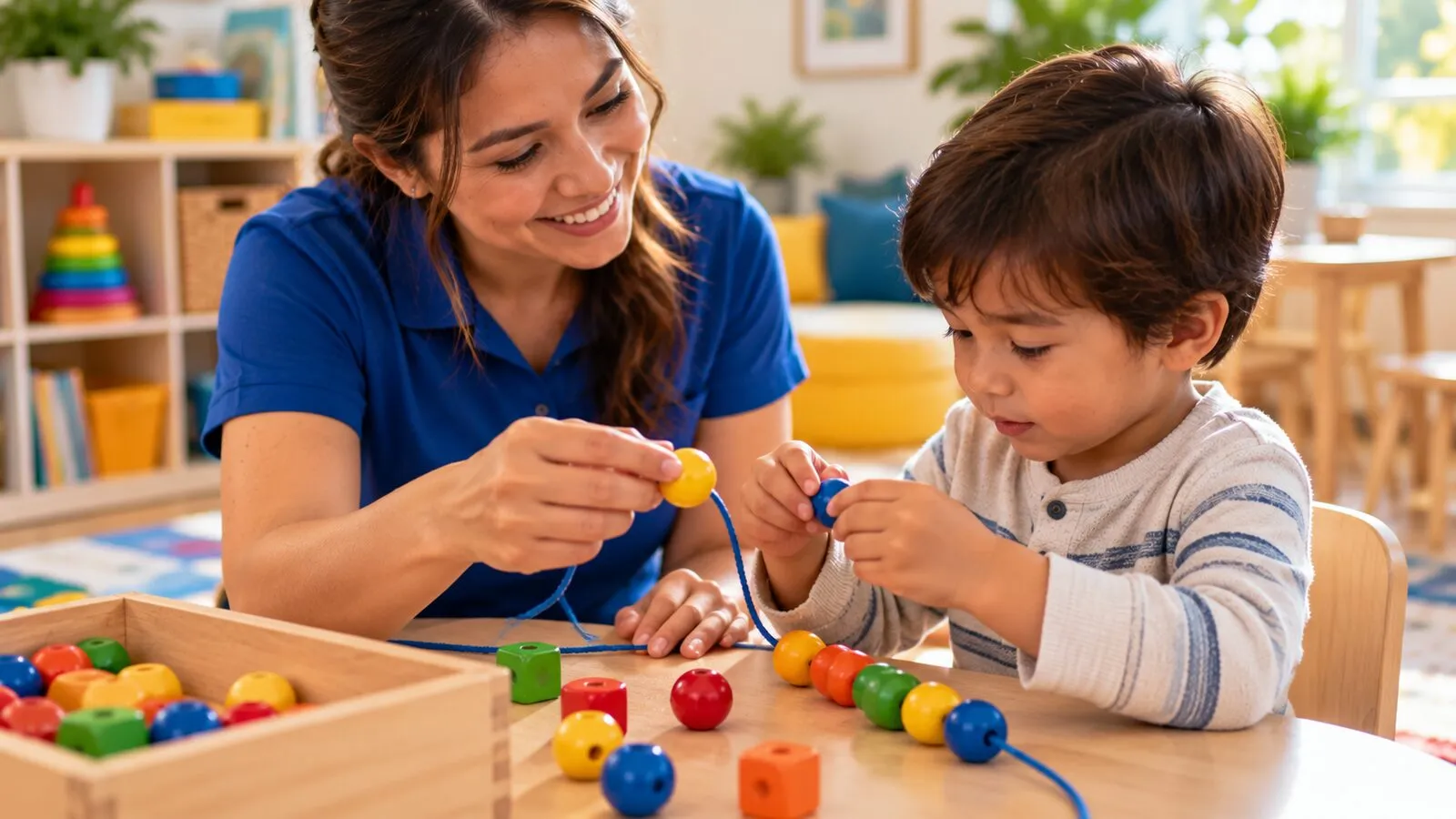
In occupational therapy, an “occupation” is any activity that fills a child’s day: playing, eating, getting dressed, drawing, going to school and taking part in family life. The American Occupational Therapy Association describes occupational therapy as helping people of all ages participate in the things they want and need to do in daily life.
For children with autism, occupational therapy (OT) often focuses on motor skills, sensory processing and self-care — the building blocks of independence.
Many autistic children experience the world’s sights, sounds, textures and movement differently. A child might cover their ears at the sound of a hand dryer, refuse certain clothing, or constantly seek movement by jumping and spinning. An occupational therapist can help you understand your child’s sensory profile and plan routines and environments that work with it. Our parent’s guide to sensory processing and autism covers this in more depth.
Occupational therapy can complement ABA therapy and speech and language therapy. For example, an OT may help a child feel regulated enough to participate, while ABA teaches the steps of a routine and speech therapy supports the words to ask for help. Read more in our article on occupational therapy for autism.
To find out whether occupational therapy could help your child, request a free consultation or call (714) 709-7819. We will explain the process and help you understand what your insurance requires.
Parent-friendly guides from our team.
How occupational therapy for autism builds fine motor, self-care, sensory, and play skills, what an OT evaluation involves, and activities to try at home.

What sensory processing differences in autism look like, sensory seeking vs avoiding, meltdowns vs tantrums, and calming strategies for home and outings.

How parents can support ABA therapy at home with routines, visual schedules, first-then language, and daily practice, plus when to check in with your BCBA.
Individualized, play-based Applied Behavior Analysis designed by BCBAs around your child and family goals.
Helping children develop verbal and non-verbal communication so they can express themselves.
Occupational therapy focuses on the skills needed for daily activities, such as motor skills, sensory regulation and self-care. ABA uses principles of learning to build a wide range of skills. Many children benefit from both.
An occupational therapist can assess how your child responds to sensory input and suggest strategies and routines that help your child feel more regulated at home and school.
Requirements depend on your insurance plan. Call us and we can help you figure out what your plan needs.
Tell us about your child and your goals. We’ll answer your questions, explain the next steps and help you check your insurance coverage. No pressure, no obligation.