
How Parents Can Support ABA Therapy at Home: Practical Strategies
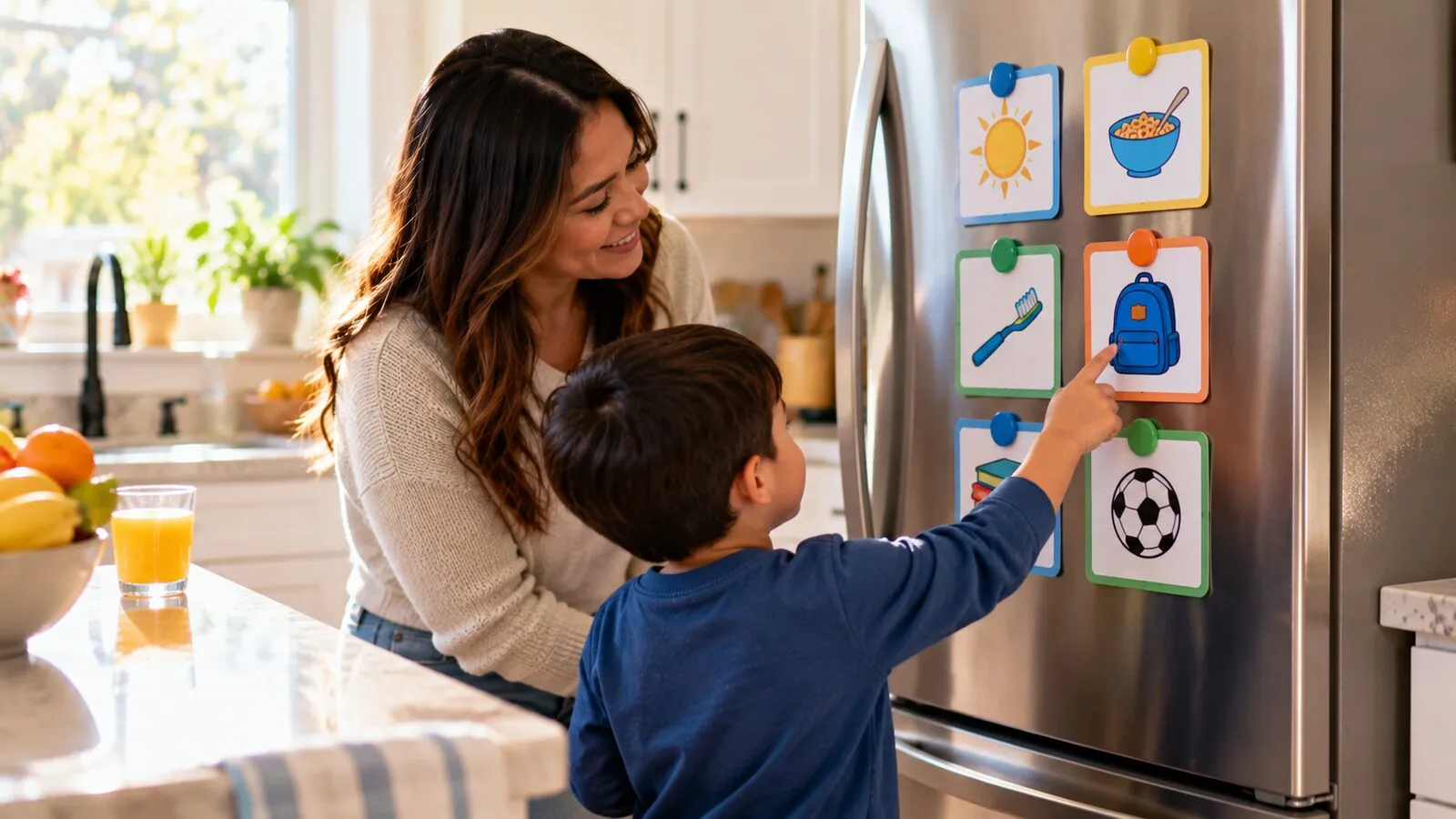
Parents can support ABA therapy at home by keeping daily routines predictable, using the same simple strategies the therapy team uses, celebrating small wins, and giving your child chances to practice new skills during everyday moments. Staying in close contact with your child’s BCBA, and checking with them before trying new behavior strategies, keeps everyone working toward the same goals.
Key takeaways
- Home is where many skills become part of daily life, a process called generalization.
- Small, consistent moments during routines matter more than long practice sessions.
- Visual schedules, first-then language, and quick praise are simple tools many families use.
- Share what you see at home with the BCBA, and ask before changing a behavior plan.
- Taking care of yourself is part of supporting your child.
Why parent involvement in ABA matters
Therapy sessions are only a small part of your child’s week. Most of your child’s life happens at home, at the park, at the store, and with family. That is where new skills need to work.
Behavior analysts call this generalization: using a skill with different people, in different places, and in different situations. A child who asks for “juice” with their therapist but not at the kitchen table has not fully generalized that skill yet. You are in the best position to help.
Family involvement is widely recognized in autism care. The NICHD lists parent-mediated therapy among autism treatment approaches, and the BACB’s ethics code asks behavior analysts to involve clients and relevant stakeholders, including families, in choosing goals and designing interventions.
You do not need to become a therapist. You just need a few tools and a good line of communication with your child’s team.
Keep daily routines consistent
Predictable routines help many autistic children feel safe and ready to learn. When your child knows what comes next, transitions tend to be easier.
Try to keep the big anchors of the day in a similar order: wake up, breakfast, getting dressed, activity, lunch, rest, and so on. The exact times can flex. The order is what gives your child a sense of control.
When a change is coming, like a doctor visit or a trip to grandma’s, prepare your child ahead of time. A quick heads-up, a photo, or a simple picture story can make a big difference.
Use visual schedules and visual supports
Many children understand pictures faster than spoken words, especially when they are tired or upset. A visual schedule shows the steps of the day or of a single routine.
Ideas to try:
- A morning schedule on the fridge: toilet, breakfast, clothes, shoes, car.
- A bathtime strip on the wall: undress, bath, towel, pajamas, brush teeth.
- A “done” pocket or box where your child moves each picture when a step is finished.
You can use photos, simple drawings, or printed icons. Ask your child’s BCBA or therapist whether they already use a particular picture set in sessions. Matching what they use helps your child connect the two settings. If your child uses AAC or picture communication, keep it within reach all day, not just during therapy.
Try first-then language
“First-then” is a simple way to help your child through a less-preferred task by showing what comes after it.
- “First shoes, then park.”
- “First wash hands, then snack.”
- “First clean up blocks, then tablet.”
Keep it short and follow through. If you say “first shoes, then park,” go to the park once the shoes are on. Following through builds trust, and your child learns that your words mean something.
A first-then board with two pictures can help if spoken words are hard for your child in the moment. Start with a small, quick “first” task so your child can succeed.
Reinforce wins, big and small
Reinforcement means responding to a behavior in a way that makes it more likely to happen again. It is a core idea in behavior analysis, and it is something parents do naturally all the time.
At home, reinforcement can be:
- Specific praise: “You asked for help. Great job using your words.”
- A high five, a tickle, or a silly song.
- Getting the thing your child asked for, right away.
- A few minutes of a favorite activity.
Be specific and quick. “Nice job putting your cup in the sink” tells your child exactly what they did well. Responding within a second or two helps your child connect the praise with the action.
Notice the small stuff. A request made with a sign or a picture instead of a scream is a big win, even if it is not perfect. These moments are worth celebrating.
Practice target skills during everyday routines
Ask your child’s BCBA for two or three skills to focus on at home. Then look for natural moments to practice them. The CDC notes that some ABA approaches, like Pivotal Response Training, take place in natural settings. Home is full of them.
| Target skill | Everyday chance to practice |
|---|---|
| Requesting | Pause before handing over a snack or toy so your child has a chance to ask. |
| Following one-step directions | “Put your shoes by the door.” “Throw this in the trash.” |
| Turn-taking | Rolling a ball, stacking blocks, or taking turns stirring pancake batter. |
| Waiting | Counting to five before pushing the swing, or waiting for the microwave to beep. |
| Self-care | Pulling up pants, washing hands, or putting on a jacket with less help each time. |
| Handling transitions | Using a timer or a warning (“two more minutes, then bath”). |
A few practice moments a day, spread across real routines, is plenty. If your child is frustrated or tired, it is fine to let a moment go. Keep practice positive.
Communicate often with your child’s BCBA
You see things the therapy team never will. Sharing them helps the BCBA make better decisions.
Useful things to share:
- A new skill your child used at home for the first time.
- Changes in sleep, eating, or health.
- Big life events, like a new sibling, a move, or a change in school.
- A behavior that is new, getting worse, or showing up in a new place.
- A routine that is especially hard, such as bedtime or car rides.
Useful things to ask:
- What are the top goals I should support at home right now?
- Can you show me how you prompt or praise this skill?
- What should I do when this behavior happens at home?
- Can I watch part of a session?
Many providers offer structured parent training, where a BCBA teaches you strategies, practices them with you, and gives feedback. This is one of the best ways to feel confident at home. If your child receives in-home ABA, you can often learn by watching and joining sessions directly.
Keep a simple home log
A short log helps you notice patterns and gives the BCBA useful information. It does not need to be fancy. A notebook, a notes app, or a sheet on the fridge works.
Try jotting down:
- Wins: “Asked ‘help please’ when stuck on the zipper.”
- Hard moments: what happened, what came right before, and what happened after.
- Context: poor sleep, a missed nap, a busy weekend, or a new food.
Bring the log to check-ins or send a quick photo of it. Over a few weeks, you and the team may spot patterns, such as tough evenings after long car rides, that help shape the plan.
What not to do at home
Good intentions can sometimes work against therapy goals. Here are a few common mistakes to avoid.
- Do not create your own behavior plan. If a challenging behavior shows up, write down what happened and tell the BCBA. Trying a new consequence or strategy on your own can confuse your child and make patterns harder to understand.
- Do not turn home into therapy all day. Your child needs downtime, free play, and time to just be a kid. So do you.
- Do not use punishment in place of teaching. Taking things away or scolding does not teach your child what to do instead. Ask the BCBA for strategies that teach a better way to meet the same need.
- Do not try to stop harmless stimming. Stimming often helps children regulate. If you are concerned about a specific behavior, talk with the BCBA first.
- Do not compare your child to others. Progress looks different for every child. Results vary, and small steps count.
Take care of yourself too
Supporting a child in therapy takes time and energy. Caring for yourself is not selfish. It helps you stay calm and patient, which helps your child.
- Protect small breaks for yourself, even 10 minutes.
- Share tasks with a partner, relative, or friend when you can.
- Connect with other parents who understand what you are going through.
- Let go of perfect. Missing a practice moment is not a failure.
If you are in Orange County, our guide to autism support for parents in Orange County lists local resources. And if you are feeling overwhelmed, talk with your own doctor or a qualified professional. For questions about your child’s specific needs, your pediatrician is a good place to start.
To see what your child is practicing during therapy, read what happens in an ABA therapy session.
Next steps
If you would like hands-on help using ABA strategies at home, our team offers parent training alongside ABA therapy. We also offer a free consultation to talk through your family’s needs and how coverage works. Call (714) 709-7819 or contact our team to get started.
Frequently asked questions
How much time should I spend practicing ABA skills at home?
You do not need to set aside long practice sessions. Most home support happens in small moments built into routines you already do, like meals, bath time, and getting dressed. Your child's BCBA can suggest a few specific targets so you know where to focus.
What if my child behaves differently at home than in therapy?
This is very common. Skills often show up first with the therapist and take time to appear in other places and with other people. Share what you see at home with the BCBA, since that information helps them plan for generalization.
Should siblings and grandparents use the same strategies?
Consistency helps, so it can be useful to share a few simple strategies with anyone who cares for your child regularly. Start small, such as using the same words for first-then or the same way of responding to a request. Ask the BCBA which strategies are most important to share.
What should I do if a strategy is not working at home?
Write down what happened, when, and what came before and after, then tell the BCBA. Avoid adding a new plan on your own. The team can look at your notes and adjust the approach so it fits your home.
References
- What are the treatments for autism? — Eunice Kennedy Shriver National Institute of Child Health and Human Development
- Treatment and Intervention for Autism Spectrum Disorder — Centers for Disease Control and Prevention
- Ethics Code for Behavior Analysts — Behavior Analyst Certification Board
- About Behavior Analysis — Behavior Analyst Certification Board
This article is for general education and is not medical advice. Every child is different — please talk with your child’s pediatrician or a qualified professional about your child’s needs. Read our medical disclaimer.


