Sensory Processing and Autism: Understanding Your Child's Senses

Sensory processing differences in autism mean your child may feel sounds, textures, lights, movement, or body signals more strongly or less strongly than other people do. Some autistic children avoid certain sensations, some seek them out, and many do both. Understanding your child’s sensory profile can make daily routines calmer and help you plan for hard moments.
Key takeaways
- The DSM-5 includes sensory over- and under-reactivity as one of the features of autism.
- There are eight sensory systems, including three “hidden” senses: vestibular (balance and movement), proprioception (body position), and interoception (internal signals like hunger).
- Children can be sensory seeking, sensory avoiding, or a mix of both.
- A meltdown from sensory overload is different from a tantrum and calls for calm, not consequences.
- An occupational therapist can help you build individualized strategies for your child.
Sensory processing is part of autism
Sensory differences are not an extra problem layered on top of autism. They are part of how autism is described. The DSM-5 criteria, summarized by the CDC, include “hyper- or hyporeactivity to sensory input or unusual interest in sensory aspects of the environment” as one of the restricted or repetitive behaviors seen in autism. The CDC’s list of signs also includes unusual reactions to the way things sound, smell, taste, look, or feel.
- Hyperreactivity (over-responsiveness) means a sensation feels much stronger than expected. A hand dryer may sound painfully loud.
- Hyporeactivity (under-responsiveness) means a sensation barely registers. Your child might not notice a scraped knee or that their hands are cold.
- Sensory interest means strong attraction to certain sensations, like watching a fan spin or smelling objects.
The American Academy of Pediatrics gives examples of both sides: loud music may cause intense discomfort for one child, while bright fluorescent lights that bother others may be riveting to another.
For a broader overview of autism, see our guide to understanding autism spectrum disorder.
The eight senses and what differences can look like
Most of us learned about five senses. Occupational therapists often describe eight.
| Sense | What it does | Over-responsive example | Under-responsive or seeking example |
|---|---|---|---|
| Sight (visual) | Light, color, movement | Squints or covers eyes in bright rooms | Stares at spinning objects or flickering lights |
| Hearing (auditory) | Sound | Covers ears at vacuums, sirens, or crowds | Makes loud noises, seems not to hear their name |
| Touch (tactile) | Texture, temperature, pain | Refuses tags, socks with seams, or messy play | Touches everything, may not notice injuries |
| Taste (gustatory) | Flavor | Eats only a few mild foods | Prefers strong flavors, mouths objects |
| Smell (olfactory) | Scent | Gags at cooking smells or perfume | Sniffs people or objects |
| Vestibular | Balance and movement, from the inner ear | Fearful of swings, dislikes feet leaving the ground | Spins, rocks, or climbs constantly |
| Proprioception | Sense of where the body is, from muscles and joints | Avoids rough play, seems stiff or clumsy | Crashes, jumps, likes tight hugs or heavy blankets |
| Interoception | Signals from inside the body, like hunger, thirst, and needing the bathroom | Overwhelmed by small body sensations | Does not notice hunger, fullness, or the need to use the toilet |
Interoception is worth special attention. A child who does not notice they need the bathroom until it is urgent, or who does not recognize hunger until they are very upset, may be having interoception differences. This can affect toilet training, mealtimes, and emotional regulation.
Sensory seeking vs avoiding
Two common patterns help parents make sense of what they see.
Sensory avoiding
A sensory-avoiding child tries to reduce or escape sensations that feel like too much. You might see your child:
- Cover their ears or run from noisy places
- Refuse certain clothes, or only wear soft, tag-free items
- Avoid messy play with sand, glue, or finger paint
- Eat a limited set of foods with similar textures
- Resist haircuts, toothbrushing, or nail trims
- Pull away from light touch, even from people they love
Sensory seeking
A sensory-seeking child looks for more of certain sensations. You might see your child:
- Jump, spin, climb, or crash into furniture or cushions
- Chew on shirts, pencils, or toys
- Touch walls, textures, or people often
- Seek loud sounds or hum and make noise
- Love tight squeezes, being wrapped in blankets, or rough play
Many children do both
Most children do not fit neatly into one group. A child might avoid loud sounds and seek deep pressure. Sensory needs can also shift with sleep, hunger, illness, and stress. A texture your child tolerates on a calm morning may feel impossible after a long day.
Repetitive movements like rocking, spinning, or hand flapping (often called stimming) can help a child regulate. The AAP notes that some children with sensory processing differences engage in self-stimulating behaviors. When stimming is safe, it usually does not need to be stopped.
Sensory overload in children: meltdown or tantrum?
Sensory overload happens when your child’s brain receives more input than it can handle at once. It might come after a birthday party, a trip to a busy store, or simply a long, loud school day.
Overload can lead to a meltdown. From the outside, a meltdown and a tantrum can look alike. Both may involve crying, yelling, or dropping to the floor. The difference is usually in what is driving the behavior. These are general patterns, not clinical rules.
| Tantrum | Meltdown | |
|---|---|---|
| What is going on | Frustration about a want or a limit, like not getting a toy | Overwhelm, when your child has more input or stress than they can cope with |
| Awareness | Your child often checks whether you are watching | Your child may seem unaware of people around them |
| What helps | Calm limits, and it often stops when the goal is met or no longer possible | Reducing input, safety, and time; rewards or consequences usually do not help in the moment |
| Afterward | Often quick | Can take a while; your child may feel tired or withdrawn afterward |
What to do during a meltdown
- Keep your child safe. Move sharp or hard objects away, or guide your child to a safer space.
- Reduce input. Dim lights, lower your voice, turn off music, and limit how many people are nearby.
- Use fewer words. A calm “You’re safe. I’m here.” is often enough.
- Offer comfort your child likes. Some children want a tight hug. Others need space. Follow your child’s cues.
- Wait. Talking about what happened can come later, once your child is calm.
After a meltdown, look back at what came before it. Patterns in timing, places, or sensations can help you prevent the next one.
Environment strategies that can help
Small changes to your child’s surroundings can lower sensory load.
- At home: use soft or dimmable lighting, reduce background noise from TVs, and create a calm corner with pillows, a blanket, and a few favorite items.
- Clothing: remove tags, choose seamless socks, and let your child help choose fabrics.
- Out in the community: go to stores at quieter times, bring headphones or sunglasses, and plan breaks in the car or a quiet spot.
- At school: ask about a quiet space, movement breaks, seating away from doors or loud areas, and a warning before fire drills when possible.
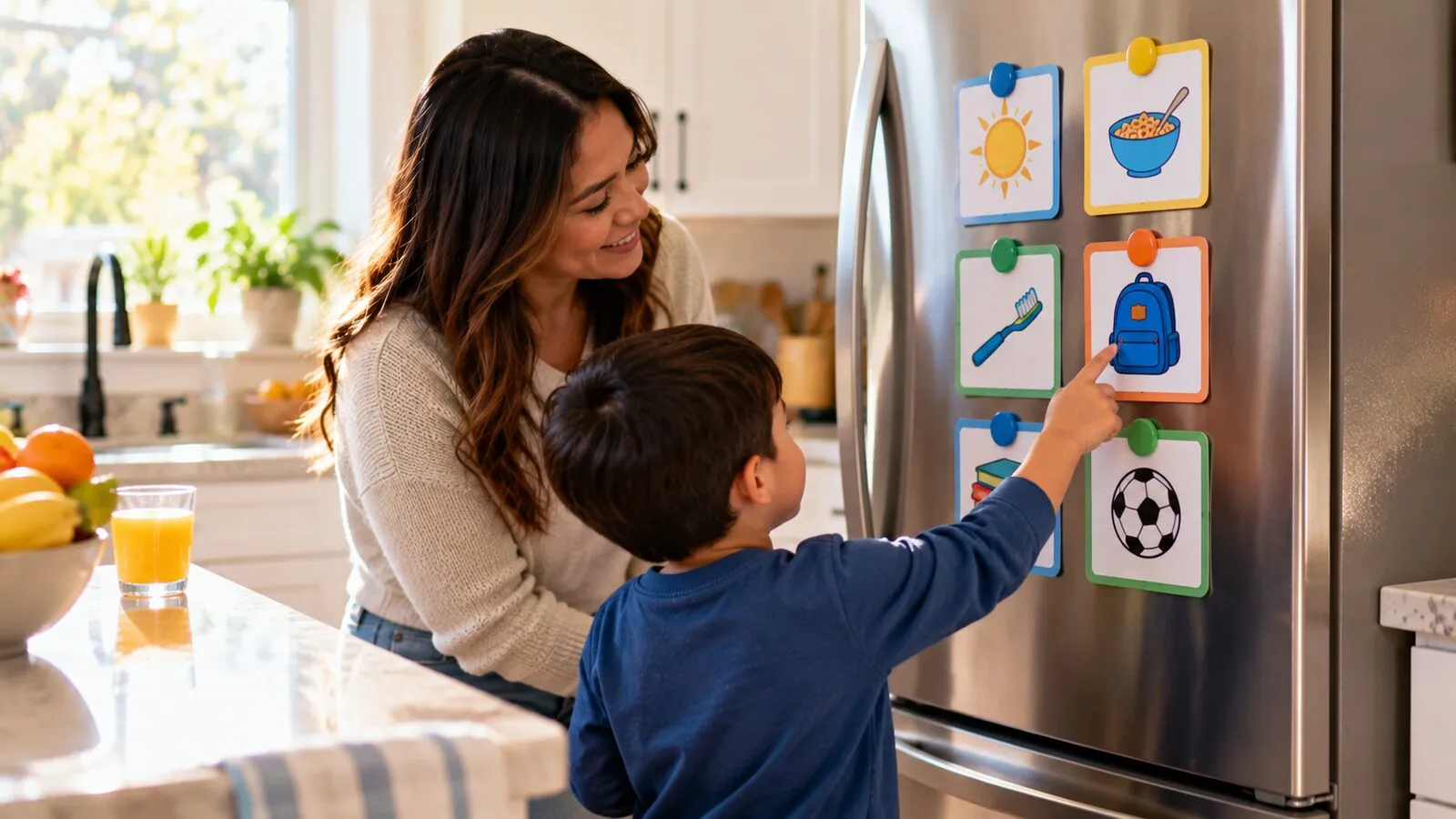
- During transitions: give a heads-up with a timer or visual schedule before moving from one activity to another.
Building sensory-friendly routines
Predictable routines with built-in sensory support can make days smoother.
- Start the day with movement. Jumping, animal walks, or carrying a heavy backpack before school can help some children feel settled.
- Build in breaks. Schedule short sensory breaks before hard tasks, like homework or haircuts, rather than waiting until your child is upset.
- Prepare for hard routines. Before a bath or toothbrushing, show a picture schedule, let your child choose the towel or toothbrush, and count down steps out loud.
- End the day with calm input. Dim lights, slow music, a warm bath, or a weighted blanket (if your child’s OT agrees it is appropriate) can help with winding down.
- Keep a simple sensory log. Note what helped and what was hard. Over a few weeks, patterns often become clear.
For ideas on keeping these routines consistent with your child’s other therapy, see supporting ABA therapy at home.
A note on sensory integration therapy
You may come across the term “sensory integration therapy.” The CDC lists it as a developmental approach that aims to help improve responses to sensory input that may be restrictive or overwhelming.
The research picture is still developing. The American Academy of Pediatrics describes the effectiveness of sensory integration therapy for autism as “limited and inconclusive”, and notes that some other sensory-based programs, such as auditory integration training, have no evidence supporting their use for autism.
This does not mean sensory strategies are not worth using. Many practical supports, like reducing noise, planning breaks, or adjusting clothing, are simple ways to make your child more comfortable. It does mean that approaches should be individualized, discussed openly with your child’s occupational therapist, and judged by whether they help your child in daily life.
When to involve an occupational therapist
Consider asking about an OT evaluation if sensory differences:
- Make daily routines like dressing, bathing, eating, or sleep very hard
- Keep your child from joining activities they want to do, like playgrounds or birthday parties
- Lead to frequent meltdowns or unsafe behavior, like running away from loud places
- Affect learning or participation at school
An occupational therapist can look at your child’s whole sensory profile and help you build a plan that fits your family. AOTA describes OT as helping people participate in the everyday activities that matter to them. Our article on occupational therapy for autism explains what an OT evaluation involves.
Talk with your pediatrician as well, especially if you notice changes in sleep, eating, toileting, or pain responses. A qualified professional can help rule out medical causes and point you to the right support.
Talk with our team
Sensory differences can be confusing, and you do not need to figure them out alone. United Autism Therapy offers occupational therapy along with ABA and speech therapy for children in Westminster and across Orange County, and we offer a free consultation.
Call (714) 709-7819 or contact us to talk about your child’s sensory needs.
Frequently asked questions
Can a child be both sensory seeking and sensory avoiding?
Yes, and it is very common. A child may avoid loud sounds but seek out spinning and jumping, or avoid certain food textures but love tight hugs. Sensory responses can also change from day to day depending on sleep, stress, and hunger.
Are noise-reducing headphones okay to use?
Many families find headphones helpful in loud places like stores, parties, or assemblies. They can give your child a way to stay in a setting that would otherwise be overwhelming. Talk with your child's occupational therapist about how and when to use them so your child also has other coping tools.
Should I stop my child from stimming?
Stimming, such as hand flapping or rocking, often helps a child calm down, focus, or express excitement. If it is safe and not causing harm, there is usually no need to stop it. If a behavior is causing injury, talk with your child's care team about safer ways to meet the same need.
Will my child's sensory differences go away?
Sensory differences are part of how many autistic people experience the world, and they are often lifelong. With support, many children learn strategies that make hard sensations easier to manage, and families learn how to set up environments that work better.
References
- Clinical Testing and Diagnosis for Autism Spectrum Disorder — Centers for Disease Control and Prevention
- Signs and Symptoms of Autism Spectrum Disorder — Centers for Disease Control and Prevention
- Sensory Integration Therapy — American Academy of Pediatrics (HealthyChildren.org)
- Treatment and Intervention for Autism Spectrum Disorder — Centers for Disease Control and Prevention
- What Is Occupational Therapy? — American Occupational Therapy Association
This article is for general education and is not medical advice. Every child is different — please talk with your child’s pediatrician or a qualified professional about your child’s needs. Read our medical disclaimer.