Occupational Therapy for Autism: Skills, Goals, and Home Activities
Occupational therapy for autism helps autistic children build the skills they need for everyday life, such as dressing, eating, using their hands, playing, and handling sensory input. An occupational therapist (OT) looks at what your child needs and wants to do each day, then uses play and real routines to make those activities easier. The aim is more independence and comfort, on your child’s terms.
Key takeaways
- OT focuses on “occupations,” the everyday activities that fill a child’s day: self-care, play, learning, and rest.
- Common focus areas for autistic children include fine motor skills, dressing, feeding, toileting, sensory regulation, play, and school readiness.
- OT starts with an evaluation and leads to individual goals that are reviewed over time.
- Simple, playful activities at home can support what your child practices in therapy.
- OT works best when it is coordinated with ABA, speech therapy, and school.
What is occupational therapy?
The American Occupational Therapy Association (AOTA) explains that occupational therapy enables people of all ages to participate in daily living. OT uses “everyday life activities (occupations) to promote health, well-being, and your ability to participate in the important activities in your life.”
For a child, occupations are things like getting dressed, eating breakfast, brushing teeth, playing on the playground, coloring, and sitting for circle time. When any of these are very hard, it can affect your child’s confidence, your family’s routines, and learning at school.
The CDC lists occupational therapy among the developmental approaches for autism, noting that it “teaches skills that help the person live as independently as possible. Skills may include dressing, eating, bathing, and relating to people.”
Areas occupational therapy can support
Each autistic child has a different mix of strengths and needs. An OT focuses on the areas that matter most for your child. The CDC notes that delayed movement skills and unusual eating and sleeping habits are among the characteristics some autistic children have, and these often come up in OT.
Fine motor skills
Fine motor skills are the small movements of the hands and fingers. They affect many daily tasks, including:
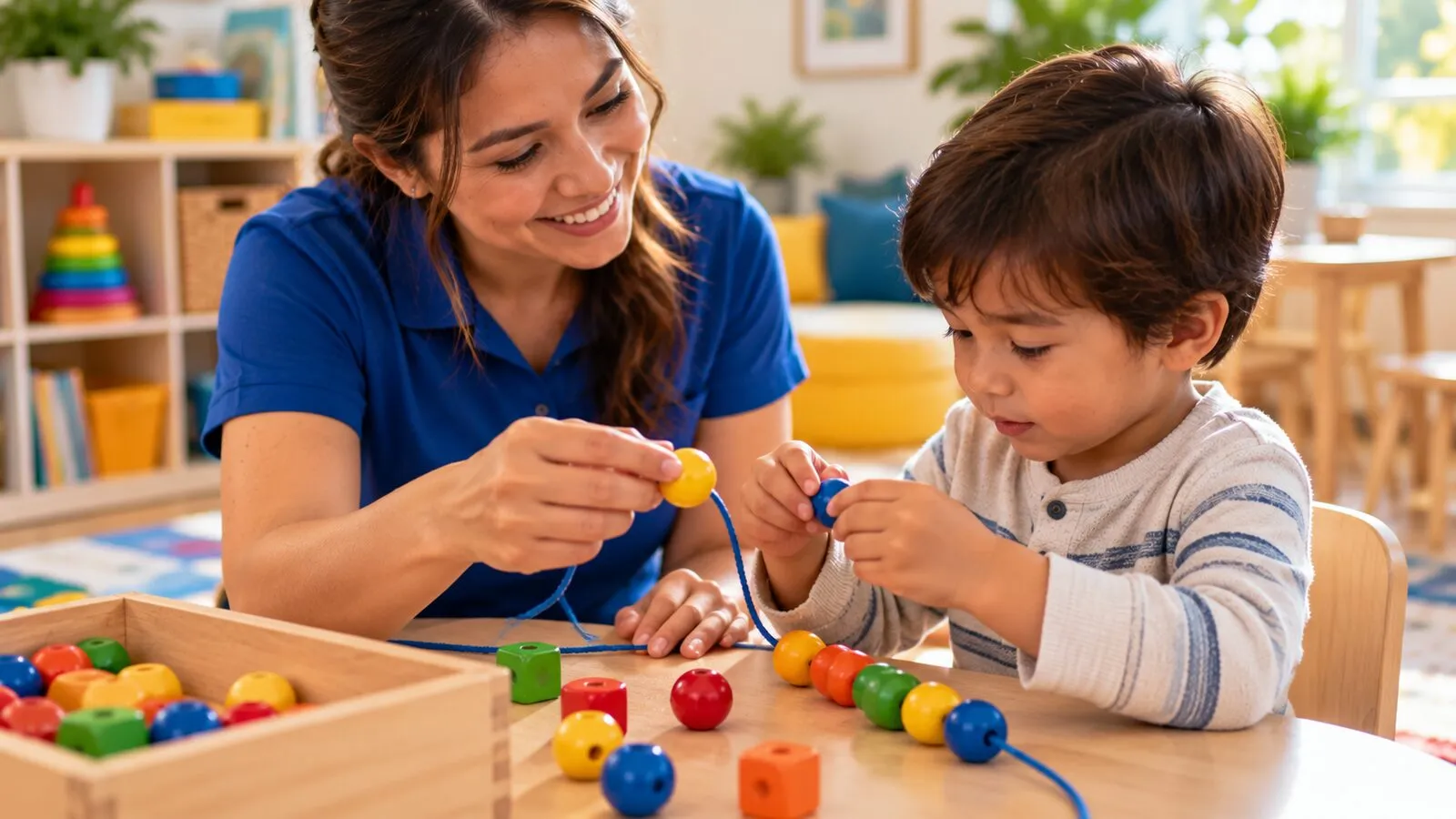
- Picking up small objects, like cereal pieces or beads
- Holding a crayon, pencil, or spoon
- Using scissors
- Opening containers and lunch boxes
- Pressing buttons, zipping zippers, and snapping snaps
An OT may also work on hand strength, using both hands together, and eye-hand coordination.
Self-care and daily living skills
Self-care skills help your child do more for themselves. OT goals may include:
- Dressing: pulling pants up, putting on shoes, managing buttons or zippers
- Feeding: using utensils, drinking from an open cup, sitting at the table for a meal
- Toileting: following toileting routines, managing clothing, washing hands
- Hygiene: brushing teeth, bathing, hair brushing, and tolerating haircuts or nail trims
Many autistic children find some of these routines hard because of sensory differences. A toothbrush may feel painful, or a certain shirt may feel scratchy. An OT looks at both the skill and the sensory experience.
Feeding and mealtimes
Some autistic children eat a very limited range of foods or have strong reactions to certain textures, smells, or colors. An OT may help with gradual, low-pressure exposure to new foods, seating and posture at the table, and utensil use. If you have concerns about your child’s nutrition, growth, or swallowing, talk with your pediatrician, who may also refer you to a feeding specialist.
Sensory regulation
The DSM-5 includes hyper- or hyporeactivity to sensory input as one of the features of autism. This means your child may feel some sensations much more strongly, or much less strongly, than others do.
An OT can help your child and your family learn:
- Which sensations are hard for your child, and which are calming
- How to prepare for hard sensory moments, like a noisy store
- Calming strategies your child can use, such as deep pressure, movement breaks, or a quiet space
- Changes to routines or spaces that reduce overload
Our article on sensory processing and autism explains sensory seeking and avoiding in more detail.
Play skills
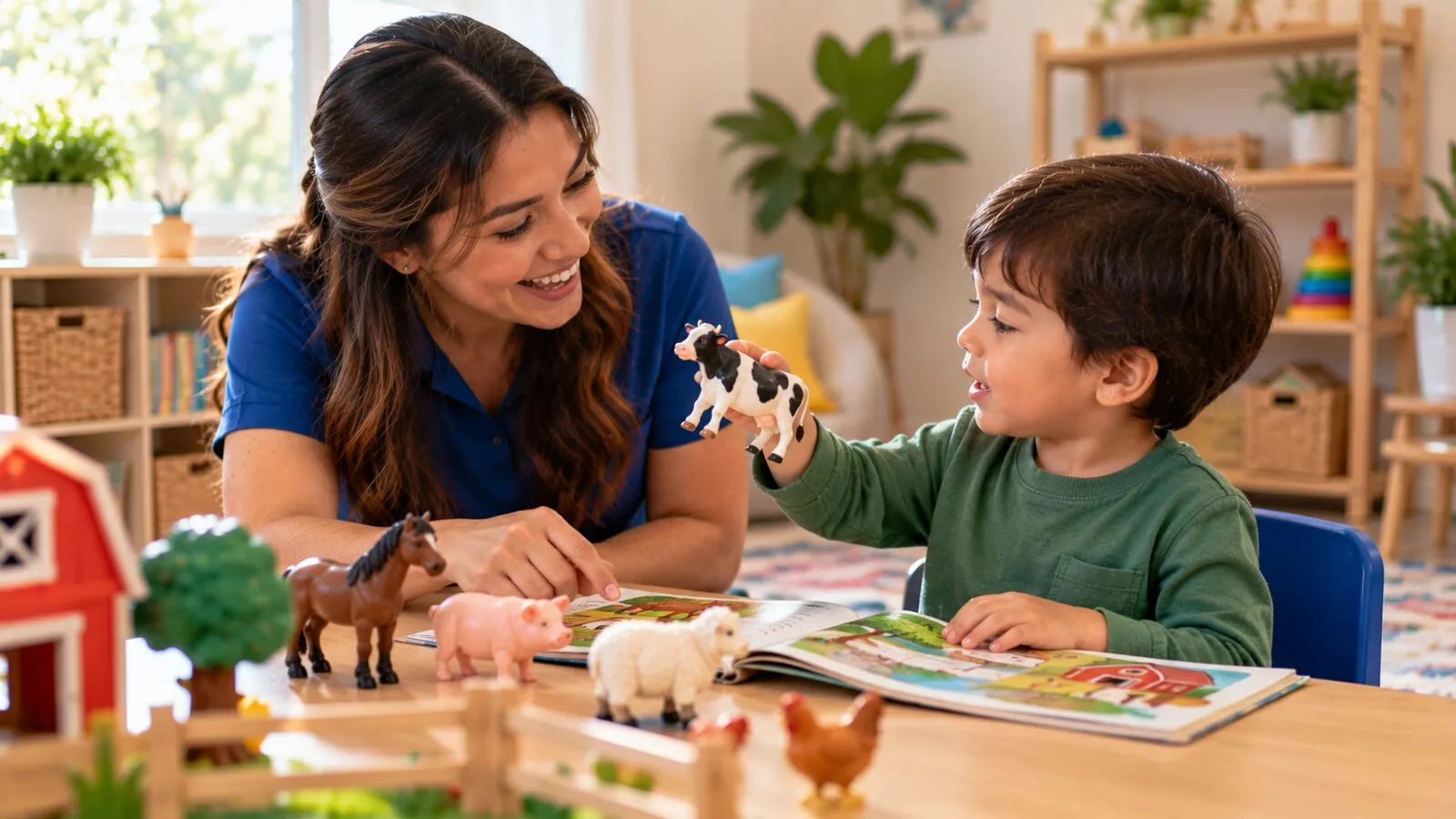
Play is a child’s main occupation, and it is where many skills grow. An OT may help your child try new ways to play with toys, build pretend play, use playground equipment, or take turns in simple games. The goal is not to change what your child enjoys, but to add options and make it easier to play with others when your child wants to.
Handwriting and school readiness
For preschool and school-age children, OT may focus on skills needed in the classroom:
- Holding a pencil and drawing lines and shapes
- Writing letters and their name
- Cutting with scissors
- Sitting and attending during group activities
- Managing backpacks, lunch boxes, and classroom materials
- Moving between activities during the school day
What happens in an occupational therapy evaluation
AOTA describes OT as starting with an evaluation that learns about the person’s history, life experiences, and interests, followed by an individual intervention plan and an outcomes review to make sure goals are being met.
For an autistic child, an OT evaluation often includes:
- A parent interview about daily routines, what is going well, and what is hardest
- Observation during play to see how your child moves, uses their hands, and responds to the environment
- Standardized assessments of motor skills, when appropriate
- Sensory questionnaires that you fill out about your child’s responses to sounds, touch, movement, and more
- Discussion of priorities so goals reflect what matters to your family
Bring notes, photos, or short videos of hard moments at home. They help the OT see what daily life really looks like.
Sample occupational therapy goals
Goals should be specific and meaningful to your child’s daily life. Here are examples of what OT goals for an autistic child might look like. Your child’s goals will depend on their own evaluation.
| Area | Example goal |
|---|---|
| Fine motor | Your child will use a pincer grasp to pick up small snack pieces during meals. |
| Dressing | Your child will pull on elastic-waist pants with minimal help as part of the morning routine. |
| Feeding | Your child will use a spoon to feed themselves yogurt with little spilling. |
| Toileting | Your child will follow a picture schedule for handwashing after using the toilet. |
| Sensory regulation | Your child will choose a calming strategy from a visual menu when they feel overwhelmed. |
| School readiness | Your child will cut along a straight line with child-safe scissors. |
Progress is tracked over time, and goals are updated as your child builds skills.
Occupational therapy activities for autism at home
Home practice does not need to feel like homework. The best OT activities fit into play and daily routines. Try a few that match your child’s interests, and ask your child’s OT which ones fit their goals.
Fine motor activities
- Squeeze, roll, and pinch play dough or putty
- Use tongs or clothespins to move pom-poms or cotton balls
- Put coins or large buttons into a slot in a container lid
- Peel stickers and place them on paper
- Thread large beads or pasta onto a string
- Tear paper into small pieces for a collage
Self-care practice
- Practice buttons and zippers on a larger coat or a practice board before your child’s own clothes
- Use a visual schedule with photos for morning and bedtime routines
- Let your child do the last step of a task first, like pulling up socks the final inch, then add more steps over time
- Choose clothing that is easier to manage, such as elastic waists and hook-and-loop shoes
Movement and sensory activities
- Carry laundry baskets, push a small cart, or do animal walks for heavy work
- Swing, bounce, or rock, if your child enjoys it
- Build an obstacle course with pillows and blankets
- Create a quiet corner with soft items and low light for calming down
Always follow your child’s cues. If an activity causes distress, stop and try again another day or in a different way. Respecting your child’s comfort and assent helps them trust the process.
How OT coordinates with ABA and speech therapy
Many autistic children see more than one type of therapist. Coordination helps your child practice the same skills in the same way across settings.
- OT and ABA. An OT might teach the physical steps of handwashing, while the ABA team helps your child practice the routine consistently. If you are new to ABA, read what ABA therapy is.
- OT and speech therapy. A child who is more regulated is often more ready to communicate. An OT and a speech-language pathologist may share strategies, such as building in movement breaks before language practice. Learn more in our guide to speech therapy for autism.
- OT and school. Sharing goals and strategies with your child’s teacher helps skills carry over to the classroom.
At United Autism Therapy, our occupational therapy services are offered alongside ABA therapy and speech and language therapy, which makes it easier for your child’s team to work from the same plan.
When to consider occupational therapy
You might ask about an OT evaluation if your child:
- Has a hard time with dressing, eating, or toileting compared with other children their age
- Avoids or struggles with crayons, scissors, or small toys
- Reacts very strongly to noise, textures, clothing, or grooming
- Seeks a lot of movement or pressure and has trouble staying safe
- Has trouble with the physical demands of preschool or school
Talk with your pediatrician or a qualified professional about your child’s specific needs and whether an OT evaluation makes sense.
Talk with our team
If you have questions about occupational therapy for your child, we would be glad to help. United Autism Therapy offers a free consultation for families in Westminster and across Orange County.
Call (714) 709-7819 or contact our team to talk about your child’s needs and next steps.
Frequently asked questions
What is the difference between occupational therapy and physical therapy?
Physical therapy focuses mainly on physical movement, such as walking, balance, and larger body movements. Occupational therapy focuses on the everyday activities your child needs and wants to do, like dressing, eating, writing, playing, and managing sensory input. Some children benefit from both.
Is occupational therapy only for sensory issues?
No. Sensory regulation is one part of OT, but occupational therapists also work on fine motor skills, self-care, feeding, play, handwriting, and school routines. The focus depends on what gets in the way of your child's daily life.
How will I know if OT is helping?
Your child's occupational therapist should set clear, measurable goals and review them with you over time. Progress often shows up in daily life first, such as fewer struggles getting dressed or more time spent at the dinner table. Results vary from child to child.
Can my child get OT at school?
Some children receive occupational therapy through their school district as part of an IEP when it supports their education. School-based OT focuses on school tasks, while outpatient or clinic OT may also address home and community routines. Ask your child's school team about eligibility.
References
- What Is Occupational Therapy? — American Occupational Therapy Association
- Treatment and Intervention for Autism Spectrum Disorder — Centers for Disease Control and Prevention
- Signs and Symptoms of Autism Spectrum Disorder — Centers for Disease Control and Prevention
- Clinical Testing and Diagnosis for Autism Spectrum Disorder — Centers for Disease Control and Prevention
This article is for general education and is not medical advice. Every child is different — please talk with your child’s pediatrician or a qualified professional about your child’s needs. Read our medical disclaimer.