Speech Therapy for Autism: How It Helps and What to Expect
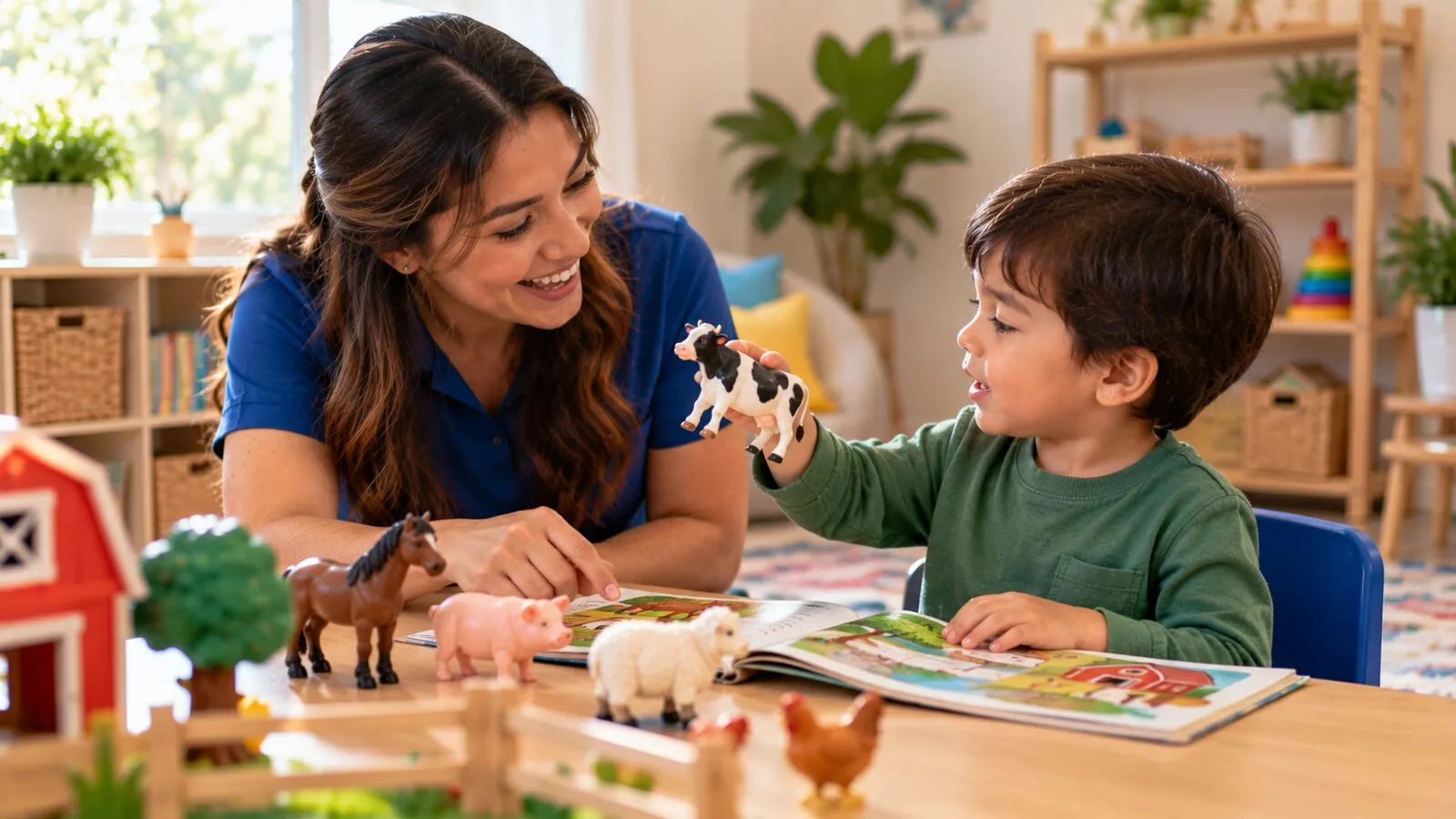
Speech therapy for autism helps autistic children understand others, express themselves, and use communication in social situations, whether they talk, sign, point to pictures, or use a device. A speech-language pathologist (SLP) evaluates how your child communicates now, then teaches new skills through play and everyday routines. The goal is not perfect speech. It is helping your child connect with people and be understood.
Key takeaways
- SLPs support understanding (receptive language), expressing (expressive language), and social communication (pragmatics).
- Echolalia, or repeating words and phrases, is often a way your child is trying to communicate.
- Nonspeaking children can build strong communication skills with AAC, and AAC does not stop speech from developing.
- Speech therapy works best when it is coordinated with ABA, occupational therapy, school, and home.
- Short, playful practice during daily routines at home can make a real difference.
What a speech-language pathologist does
Speech-language pathologists are licensed professionals trained in communication, language, speech, and swallowing. ASHA explains that SLPs can help a person with autism learn new communication and social skills in different settings like home, school, and work.
For an autistic child, an SLP may:
- Evaluate how your child understands and uses language, gestures, and play
- Set goals based on what matters most for your child and family
- Teach new ways to communicate, including spoken words, signs, pictures, or AAC
- Work on social communication, like taking turns and joining play
- Coach parents and caregivers so practice continues outside sessions
ASHA also notes that SLPs may teach families and caregivers how to play with their child while teaching skills. You are an important part of the team.
The CDC lists speech and language therapy among the developmental approaches for autism, describing it as help “to improve the person’s understanding and use of speech and language.”
The areas of communication speech therapy supports
Communication is more than talking. An SLP will look at several areas, and your child may have strengths in some and need support in others.
Receptive language: understanding
Receptive language is how your child understands what others say or show. Goals might include:
- Following one-step directions, like “Get your shoes”
- Pointing to pictures or objects when named
- Understanding words for location, like “in,” “on,” and “under”
- Answering simple “what” and “where” questions
Expressive language: expressing
Expressive language is how your child shares wants, ideas, and feelings. It can be spoken, signed, written, or shown with pictures or a device. Goals might include:
- Requesting items or activities (“more,” “open,” “bubbles”)
- Saying “no” or “all done” in a clear, safe way
- Combining two or three words (“big ball,” “want juice”)
- Describing what happened at school or on a trip
Pragmatics and social communication
Pragmatics is the social use of language. ASHA describes social communication differences in autism as including challenges with joint attention, social reciprocity, and using verbal and nonverbal communication. Goals might include:
- Sharing attention with you on a toy or book (joint attention)
- Taking turns in a game or a conversation
- Greeting familiar people
- Asking for help when stuck
- Staying on a topic, or noticing when a friend wants to change it
Speech sounds and play
Some children also need support with how clearly they pronounce sounds. Play skills matter too, because many early language skills are learned during play.
Echolalia: repeating as a way to communicate
Echolalia means repeating words or phrases. The CDC lists repeating words or phrases over and over as one of the restricted or repetitive behaviors seen in autism.
Echolalia can be immediate, like repeating your question right back to you. It can also be delayed, like reciting a line from a show hours later. It is easy to assume these repeats are meaningless, but they often carry a message. A child who says “Do you want a cookie?” may be asking for a cookie. A line from a cartoon may mean “I’m excited” or “I need a break.”
Many SLPs treat echolalia as a starting point rather than something to stop. They watch when your child uses a phrase, figure out what it likely means, and help your child build more flexible language from there. At home, you can do the same:
- Notice when the phrase comes up and what is happening around it
- Respond to the likely meaning (“You want a cookie. Here’s a cookie.”)
- Model a simple version your child could use next time (“Cookie, please”)
- Share your notes with your child’s SLP
Nonspeaking children and AAC
Some autistic children speak few or no words. Others speak but find it hard when they are tired, upset, or overwhelmed. Augmentative and alternative communication (AAC) gives these children other ways to communicate, like gestures, picture boards, or a speech-generating app.
ASHA is clear on two points that often worry parents. First, there are no requirements needed to learn low- or high-tech AAC. Second, AAC will not stop someone from talking or slow down language development.
An SLP can help choose the right system and teach your family how to use it. Our guide to AAC and autism covers types of AAC, common myths, and how to get started.
What speech therapy sessions look like
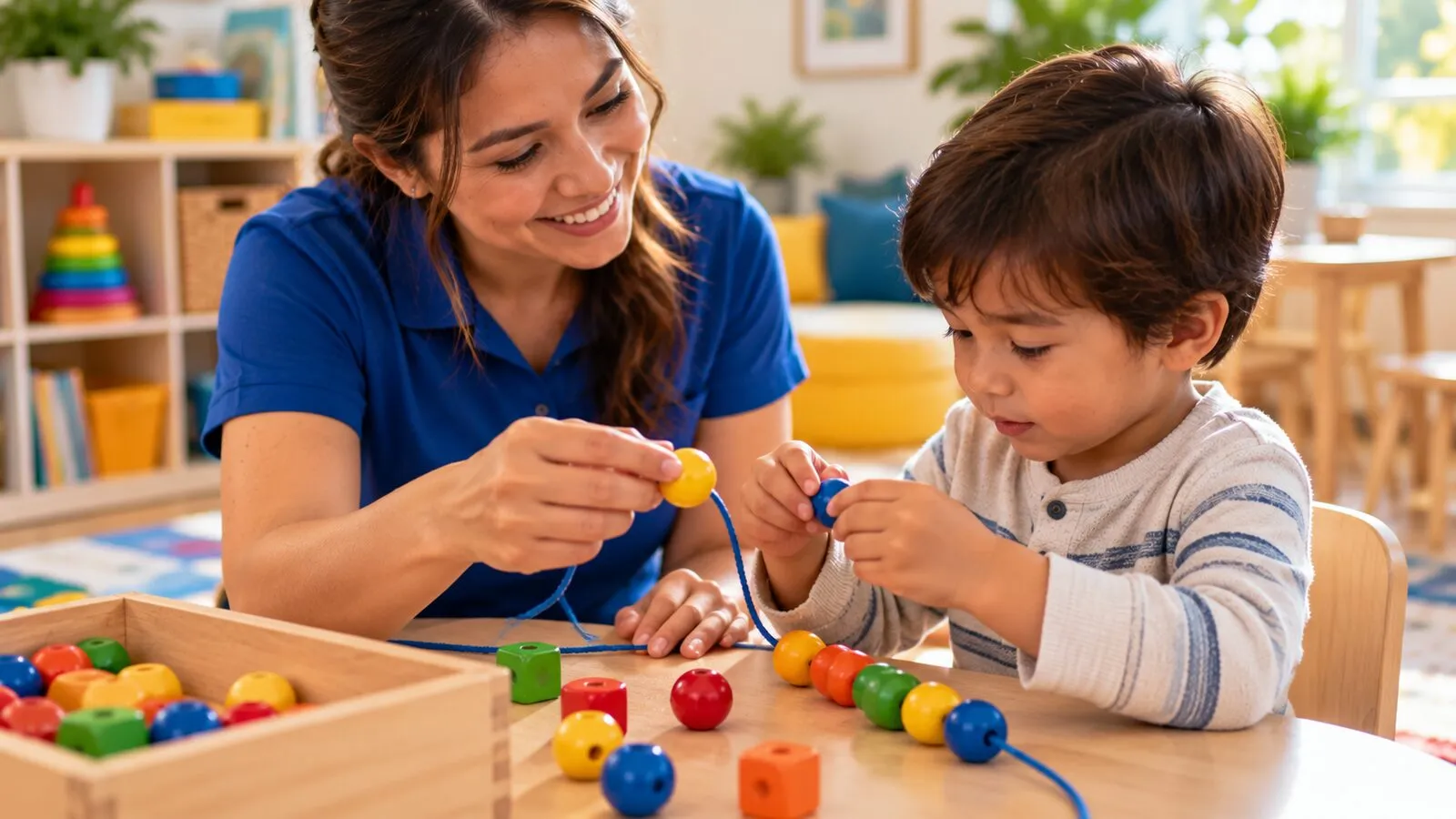
Sessions for young autistic children usually look a lot like play. That is on purpose. Children learn language best when they are interested and engaged.
A typical session might include:
- A warm-up with a favorite toy, song, or activity to build comfort.
- Play-based practice. The SLP sets up chances to communicate, like holding bubbles and waiting for your child to ask, or pausing a song so your child can fill in the next word.
- Structured practice on a specific goal, such as naming pictures or answering questions, if that fits your child.
- Movement or sensory breaks when your child needs them.
- Parent coaching. The SLP shows you a strategy and helps you try it.
A good SLP pays attention to your child’s comfort and assent. If your child is upset or pulling away, the session slows down or changes. Communication should feel safe and rewarding, not like a test.
Questions to ask your child’s SLP
- What are my child’s current communication strengths?
- What are the top two or three goals, and why those?
- How will we measure progress?
- What can I practice at home this week?
- How will you coordinate with my child’s other therapists and school?
How speech therapy coordinates with ABA
Many autistic children receive both speech therapy and ABA therapy. When the two are coordinated, your child gets a consistent message across settings.
ABA therapy uses principles of learning and behavior to teach meaningful skills, and communication is often a major focus. If you are new to ABA, our article on how ABA therapy works gives an overview. The CDC notes that developmental approaches like speech therapy are often combined with behavioral approaches.
Coordination might look like:
- Shared goals. If the SLP is teaching your child to request with two-word phrases, the ABA team practices the same phrases.
- One communication system. Everyone uses the same signs, picture symbols, or AAC layout so your child is not confused.
- Shared data. The SLP and the Board Certified Behavior Analyst (BCBA) compare what they see so goals stay on track.
- Aligned home strategies. Parent coaching from both teams points in the same direction.
At United Autism Therapy, our speech and language therapy services sit alongside our ABA therapy and occupational therapy, which makes this kind of teamwork easier to plan.
Speech therapy for autism at home: practical activities
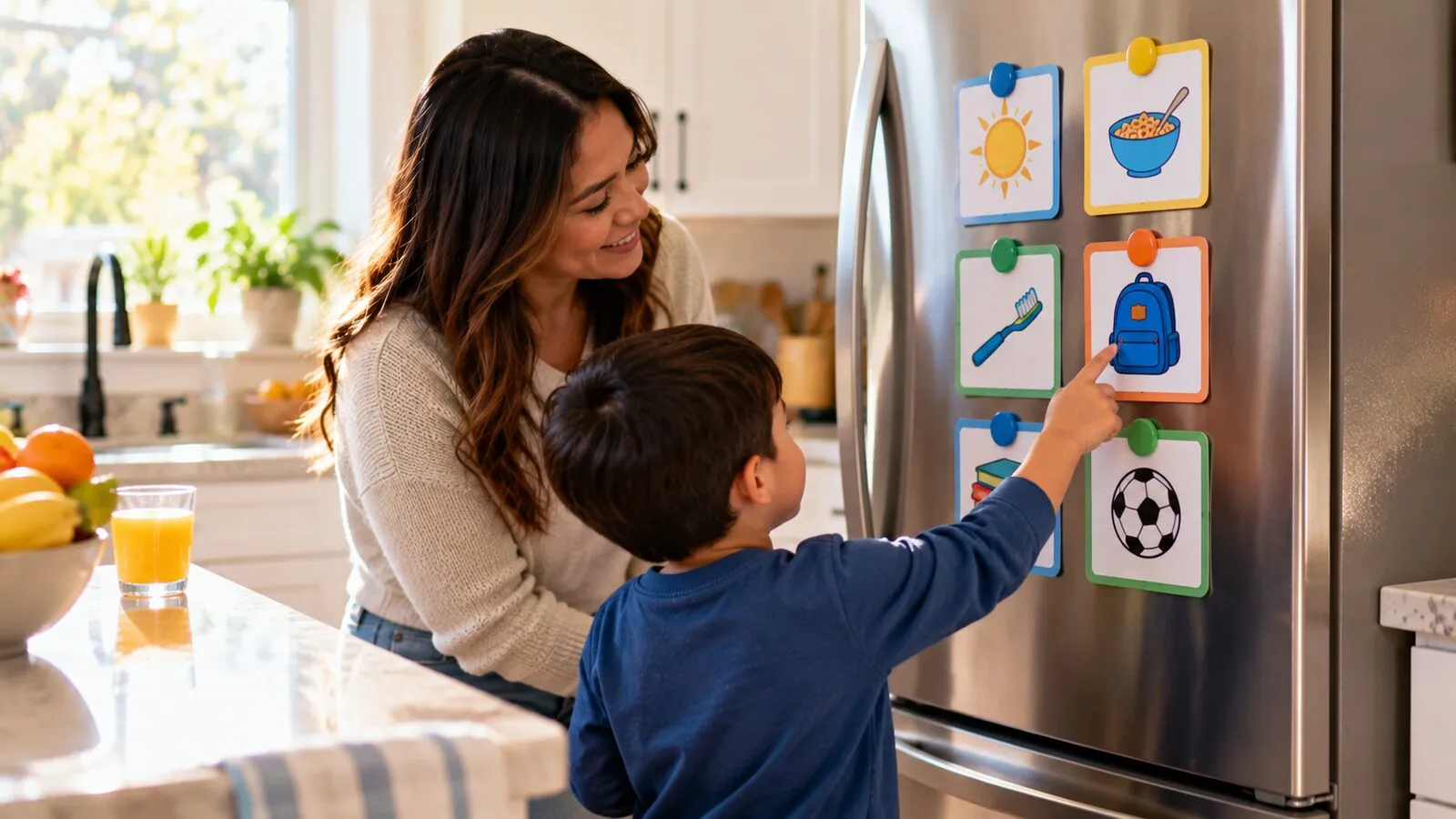
You do not need special materials to support communication at home. The most useful practice happens during everyday routines your child already knows.
- Pause and wait. During a favorite song or game, stop just before the fun part and wait a few seconds. Give your child a chance to communicate “more” with a word, sound, sign, look, or picture.
- Offer choices. Hold up two snacks or toys and name them: “Apple or cracker?” Accept any clear way your child chooses.
- Narrate what you do. Use short phrases during bath time, cooking, or getting dressed: “Shirt on. Arms up. All done.”
- Add one word. If your child says one word, repeat it and add one more. “Car” becomes “blue car” or “car go.”
- Put favorites in sight but out of reach. A clear container or a high shelf creates a natural reason to ask for help.
- Read the same books again. Repetition helps children learn words and predict what comes next. Pause and let your child fill in a familiar word.
- Follow your child’s lead. Join what your child is already interested in, then talk about it. Interest makes words stick.
- Keep the AAC nearby. If your child uses pictures or a device, keep it available during every routine, not just at therapy.
Keep practice short and fun. If your child is tired or upset, it is fine to stop. For more ideas on keeping home routines consistent with therapy, see supporting ABA therapy at home.
When to seek speech therapy
Consider asking about a speech-language evaluation if your child:
- Uses few or no words, or has lost words they used to say
- Rarely points, waves, or uses other gestures
- Does not respond to their name or seems not to understand simple directions
- Repeats phrases often but rarely uses language in new ways
- Gets very frustrated when they cannot get their message across
- Talks a lot but has trouble with back-and-forth conversation or making friends
You do not need to wait for an autism diagnosis to ask about communication. Talk with your pediatrician about your concerns and what kind of evaluation makes sense for your child.
Talk with our team
If you think your child could benefit from speech therapy, we are happy to talk it through. United Autism Therapy offers a free consultation for families in Westminster and across Orange County.
Call (714) 709-7819 or reach out to our team to ask questions and learn about next steps.
Frequently asked questions
My child talks a lot. Can they still benefit from speech therapy?
Often, yes. Some autistic children have large vocabularies but find conversation, taking turns, understanding figures of speech, or reading social cues hard. A speech-language pathologist can work on these social communication skills, not just on words.
How often are speech therapy sessions?
It depends on your child's needs, goals, and the recommendation from the speech-language pathologist's evaluation. Your child's SLP will suggest a schedule and should explain how progress will be reviewed over time.
Should I correct my child when they say a word wrong?
Usually it works better to model the word correctly without asking your child to repeat it. If your child says "wa-wa," you might say "Water! You want water." This keeps communication positive and gives your child a clear example.
Does my child need a diagnosis to get speech therapy?
A child does not need an autism diagnosis to be evaluated by a speech-language pathologist. Insurance coverage and authorization rules vary by plan, so check with your plan about what documentation it requires.
References
- Autism — American Speech-Language-Hearing Association
- Augmentative and Alternative Communication — American Speech-Language-Hearing Association
- Autism (Practice Portal) — American Speech-Language-Hearing Association
- Treatment and Intervention for Autism Spectrum Disorder — Centers for Disease Control and Prevention
- Signs and Symptoms of Autism Spectrum Disorder — Centers for Disease Control and Prevention
This article is for general education and is not medical advice. Every child is different — please talk with your child’s pediatrician or a qualified professional about your child’s needs. Read our medical disclaimer.