ABA Therapy Goals: Real Examples and How Your Child's Team Sets Them
Quick answer
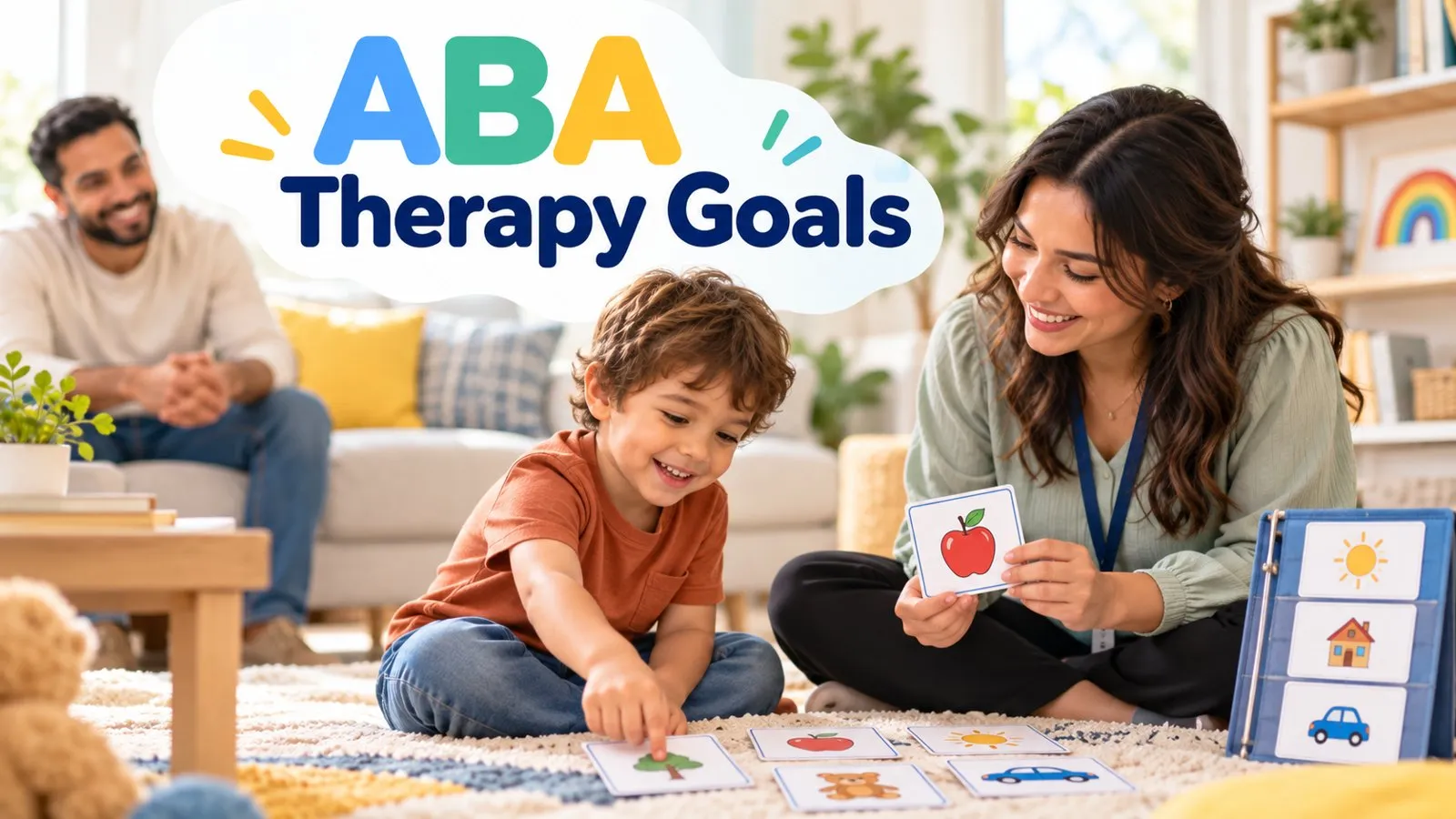
ABA therapy goals are specific, measurable skills a child works toward, chosen from an assessment and the family's priorities. Common areas include communication, social and play skills, daily living, independence, and learning readiness. A Board Certified Behavior Analyst (BCBA) writes each goal so progress can be tracked, and updates goals as the child grows.
ABA therapy goals are the specific skills your child works on during applied behavior analysis (ABA). They usually cover communication, social and play skills, daily living, independence, and learning readiness. Good goals are built around your child’s strengths and your family’s daily life, and they are written clearly enough that everyone can see when progress happens.
Key takeaways
- ABA goals come from an assessment of your child plus your family’s priorities, not from a one-size-fits-all checklist.
- Most goals fall into a few areas: communication, social skills, daily living, independence, and learning readiness.
- A good goal names the skill, the situation, and how the team will know it is learned.
- Communication goals include any way your child communicates, not only spoken words.
- Goals should change over time as your child grows and as your family’s needs shift.
What are ABA therapy goals?
An ABA goal is a clear description of a skill your child is learning. It is part of the treatment plan, which is the written roadmap your child’s Board Certified Behavior Analyst (BCBA) creates after assessing your child.
The National Institute of Child Health and Human Development notes that the most effective therapies and interventions are often different for each person. That is why two children of the same age can have very different goals. One may be learning to ask for help. Another may be learning to stay with a parent in a store.
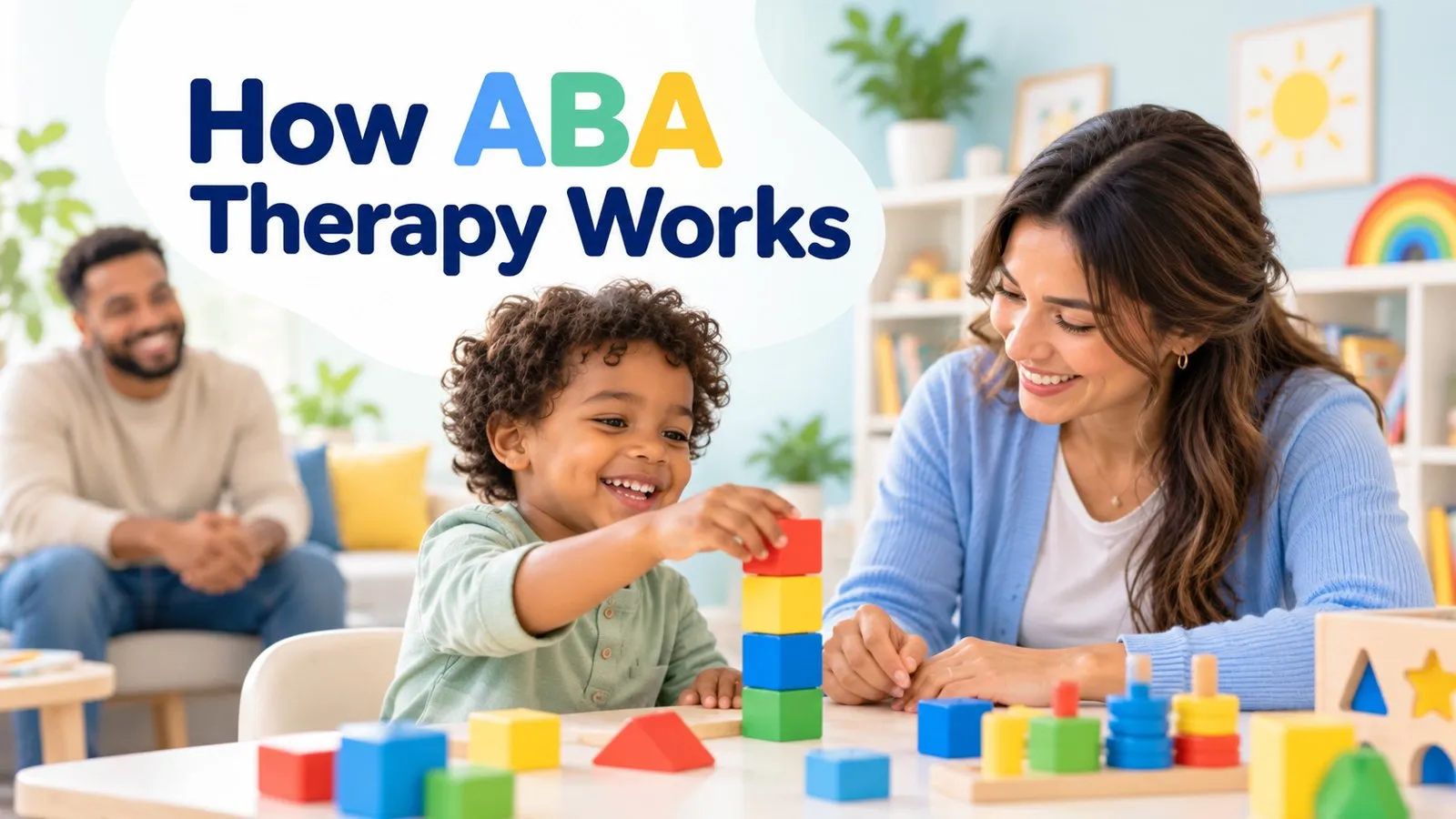
If you are new to ABA, our guide to how ABA therapy works walks through the full process, from assessment to reassessment.
How are ABA goals chosen?
Goal setting usually starts with three things:
- An assessment. The BCBA observes your child, may use structured skill assessments, and learns what your child can already do.
- Your family’s priorities. What is hardest at home right now? Mornings? Mealtimes? Leaving the park? Your answers shape the plan.
- Your child’s interests and comfort. Goals should build on what your child enjoys and respect their dignity, not ask them to act like someone else.
The Behavior Analyst Certification Board’s ethics code says behavior analysts should involve clients and relevant stakeholders, including when selecting goals. In plain terms, you should have a real voice in what your child works on.
In-home sessions can make this easier. When therapy happens in your living room or kitchen, the team sees the exact routines you are describing. Learn more about in-home ABA therapy and how it fits family life.
Examples of ABA therapy goals by skill area
Every child’s plan is different. These examples show the kinds of goals families often see. Your child’s BCBA will decide which, if any, fit your child.
Communication goals
Communication is much broader than talking. For some children, the most useful way to communicate may be gestures, pictures, signs, or a speech-generating device. This is called functional communication, meaning any form of communication that lets your child get a need met.
Examples:
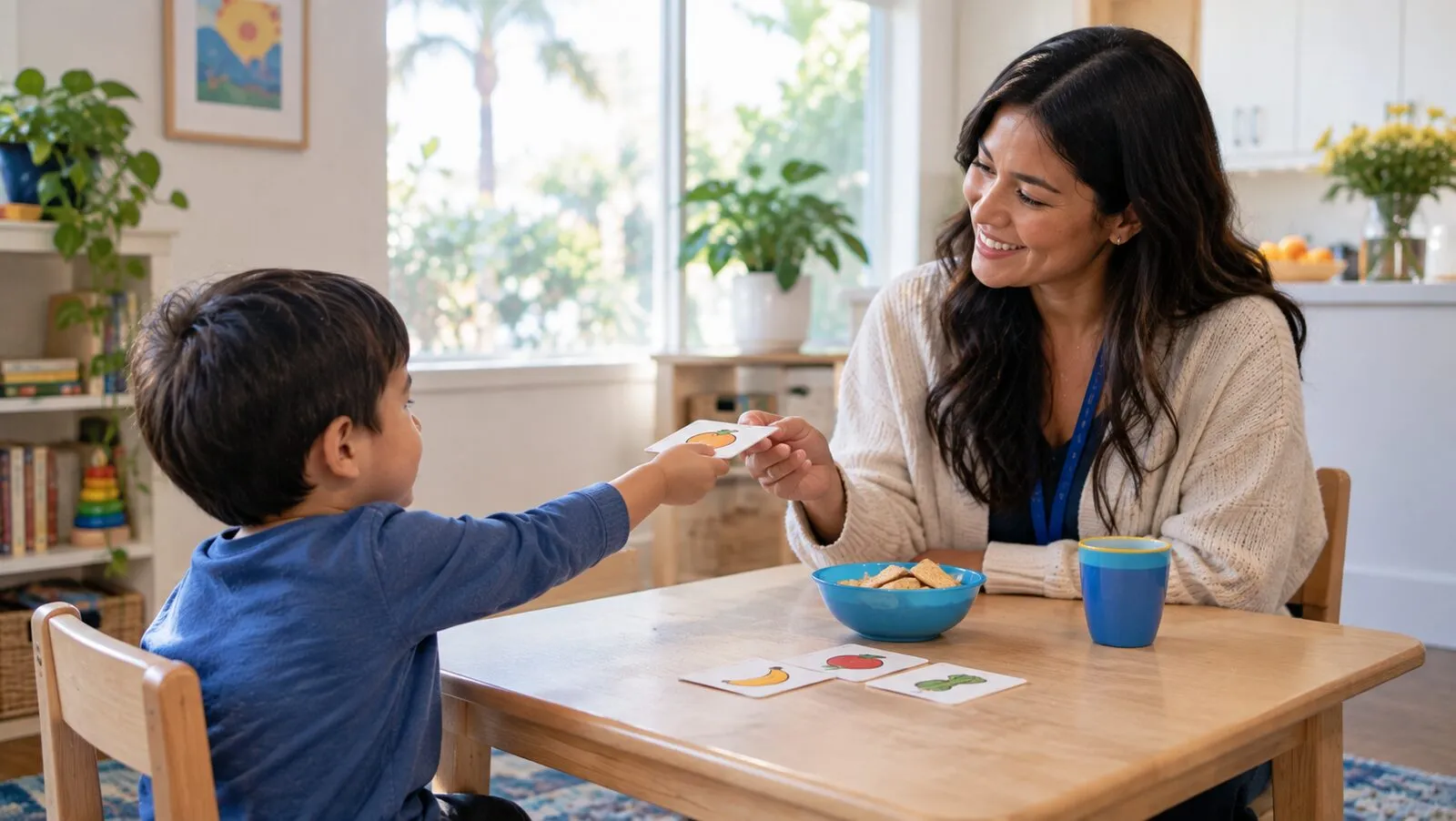
- Asks for a preferred snack using a word, sign, picture card, or device
- Says or shows “all done” to end an activity instead of pushing materials away
- Points to one of two choices when asked “Which one?”
- Follows a one-step direction, such as “Get your shoes”
- Asks for help when a toy is stuck
Expressive communication is what your child communicates out. Receptive communication is what your child understands. Many plans include both.
The American Speech-Language-Hearing Association explains that augmentative and alternative communication (AAC) means all of the ways that someone communicates besides talking. If your child has significant communication challenges, a speech-language pathologist can be an important part of the team. Our article on AAC and autism explains how these tools can support speech and language.
Social and play goals
Social goals should focus on interactions that matter to your child, not on forcing eye contact or a certain style of play.
Examples:
- Takes turns in a simple game with a sibling, with one reminder or less
- Responds when a family member says their name
- Joins a parent in a shared activity, like rolling a ball back and forth
- Shows a toy to someone to share interest
- Greets a familiar person in their own way, such as a wave, word, or high-five
Daily living goals
Daily living skills are the practical tasks that help your child take part in everyday life. They are often taught by breaking the task into small steps, a method called task analysis.
Examples:
- Washes hands with picture prompts at the sink
- Puts on shoes before leaving the house
- Uses a spoon to eat part of a meal
- Puts toys in a bin at clean-up time
- Sits with the family for part of a meal
Independence and safety goals
Independence goals help your child do more on their own, with less adult help over time.
Examples:
- Completes a short morning routine using a visual schedule
- Waits briefly when told “wait” before getting an item
- Holds an adult’s hand in a parking lot
- Stays with a caregiver in a store
Learning readiness goals
Learning readiness skills make it easier for your child to learn in therapy, at school, and at home.
Examples:
- Sits for a short, fun activity with an adult
- Moves from one activity to the next with a visual timer
- Imitates a simple action, like clapping or stacking a block
- Attends to a short story or song
What makes a good ABA goal?
Vague goals are hard to track. Clear goals tell everyone what success looks like. Many teams describe this as making goals measurable, meaning anyone watching could count or rate the skill the same way.
| Vague goal | Clear, measurable goal |
|---|---|
| Improve communication | Asks for a snack using a picture card or word during 4 of 5 snack times, without a prompt |
| Better social skills | Takes 3 turns in a simple game with a sibling, with no more than 1 reminder |
| More independent mornings | Puts on shoes on their own on 3 school mornings in a row |
| Fewer meltdowns at transitions | Moves from tablet time to dinner with a 2-minute visual timer, on most evenings in a week |
The numbers in this table are illustrations, not standard targets. Your child’s BCBA will set criteria that fit your child.
A good goal also answers a few questions:
- Why does this matter? It should make daily life easier, safer, or more enjoyable for your child.
- Where will it be used? At home, at school, in the community, or all three.
- With whom? Skills are more useful when they work with parents, siblings, and other people, not only the therapist.
How progress toward goals is measured
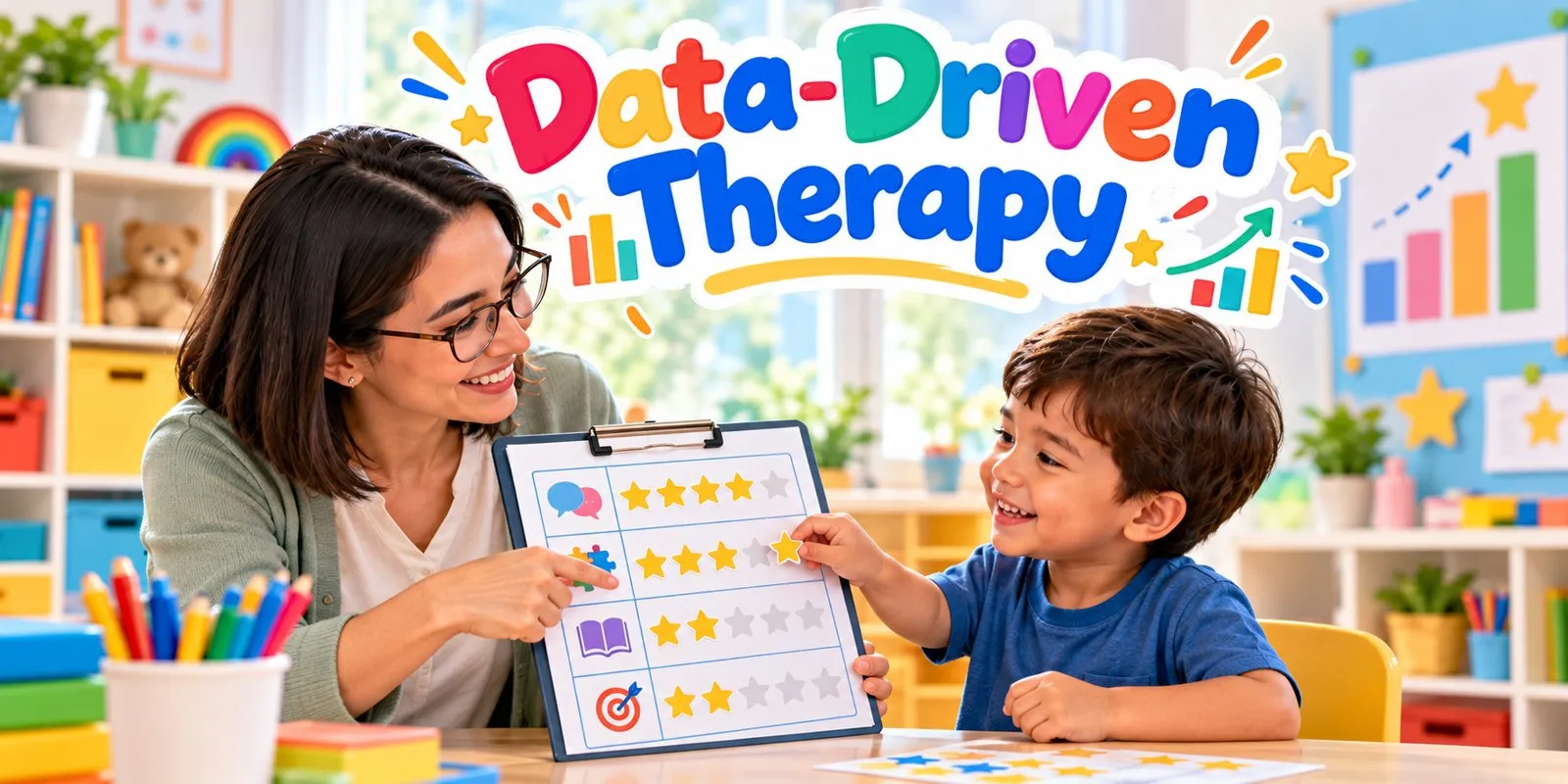
The CDC notes that in ABA, progress is tracked and measured. During sessions, therapists record how your child does on each goal, such as how often a skill happens or how much help was needed. The BCBA reviews that information and adjusts the plan.
We explain this process, and how to read your child’s progress updates, in our article on ABA data collection. For a broader look at what ABA can and cannot do, see the benefits of ABA therapy.
How parents can help with ABA goals
You know your child better than anyone. Small things you share can change the plan for the better.
- Tell the team what matters most. If bath time is the hardest part of your day, say so.
- Notice every attempt. A new gesture or sound may be your child trying to communicate. Share it.
- Practice in real moments. Your BCBA can show you how to use the same approach during snack, play, or bedtime. Our guide on supporting ABA therapy at home has practical ideas.
- Ask questions. If you do not understand a goal or why it was chosen, ask. A good team will explain it in everyday words.
Results vary from child to child, and progress is rarely a straight line. Talk with your pediatrician or a qualified professional about your child’s specific needs.
Talk with our team
If you would like to understand what goals might look like for your child, we are happy to talk it through. United Autism Therapy offers ABA therapy with a focus on in-home support across Westminster and Orange County. Schedule a free consultation by calling (714) 709-7819 or reaching out through our contact page.
Frequently asked questions
How many goals does a child usually work on in ABA?
There is no set number. It depends on your child's needs, how often sessions happen, and what matters most to your family. Your child's BCBA will usually focus on a manageable set of priorities and add new goals as earlier ones are mastered.
Can I ask to add or change a goal?
Yes. Families are part of the team, and your input on what matters at home is valuable. If a goal no longer feels relevant, or a new challenge comes up, bring it to your child's BCBA so the plan can be reviewed.
Are ABA goals the same as IEP goals at school?
Not exactly. An IEP is a school plan under special education law, while ABA goals are part of a therapy treatment plan. They can overlap, and it often helps to share both plans with each team so everyone works in the same direction.
What happens when my child meets a goal?
The team usually checks that the skill holds up over time, with different people, and in different places. Then the goal may be marked as mastered, practiced less often to keep it strong, and replaced with a next-step goal.
References
- Treatment and Intervention for Autism Spectrum Disorder — Centers for Disease Control and Prevention
- What are the treatments for autism? — Eunice Kennedy Shriver National Institute of Child Health and Human Development
- Ethics Codes (Ethics Code for Behavior Analysts) — Behavior Analyst Certification Board
- Augmentative and Alternative Communication (AAC) — American Speech-Language-Hearing Association
This article is for general education and is not medical advice. Every child is different — please talk with your child’s pediatrician or a qualified professional about your child’s needs. Read our medical disclaimer.